
Bordeaux 2025 Vintage: AOC Weather and Preliminary Wine Quality Report by Maitre de Cave
The 2025 Bordeaux vintage is already being hailed as a year of extremes and resilience, marked by record-breaking heat, early phenological milestones, and some of the lowest yields in recent memory. Yet, despite these challenges, early commentaries from producers, critics, and official bodies suggest that 2025 may deliver wines of remarkable concentration, balance, and terroir expression—if in limited quantities. Here is an AOC Weather and Preliminary Wine Quality Report by Maitre de Cave.
An AOC-by-AOC analysis by Maitre de Cave
This report provides a comprehensive, AOC-by-AOC analysis of the 2025 growing season’s weather, the impact on vine development and grape quality, and a preliminary assessment of vintage quality at the producer level. It also explores broader factors influencing the vintage, including disease pressure, vineyard practices, regulatory changes, and market expectations.
Regional Overview: Bordeaux 2025 Climate and Vintage Context
The 2025 growing season in Bordeaux will be remembered for its exceptional heat and early harvests. Following a mild winter that replenished groundwater, spring arrived early and dry, leading to rapid budburst and uniform flowering. Summer brought record temperatures, with multiple heatwaves—particularly in August—pushing vines to their physiological limits. Rainfall was scarce, and the combination of heat and drought led to smaller berries, thick skins, and reduced yields, but also to high concentration and healthy fruit.
Minimal disease pressure
Disease pressure was minimal, a relief after several years of mildew challenges. The harvest began earlier than ever in many top estates, with Merlot and white varieties picked in late August and Cabernet Sauvignon in early to mid-September. The sweet wine regions of Sauternes and Barsac faced uncertainty due to the lack of late-season humidity necessary for botrytis development, though some estates managed to produce concentrated, if limited, dessert wines.
Lower yield
Official figures from the Conseil Interprofessionnel du Vin de Bordeaux (CIVB) and France’s Ministry of Agriculture forecast Bordeaux’s 2025 wine production at around 3.6 million hectoliters, about 15% below the five-year average, reflecting both the impact of the weather and ongoing vineyard restructuring. However, what was lost in quantity may be gained in quality, with many producers and critics drawing comparisons to the powerful 2022 vintage but noting greater freshness and balance in 2025 due to cooler nights and timely rainfall in some areas.
Ready to read…
A clear, organized commentary on the 2025 vintage quality proceeds by AOC, and it includes both commentary available in the press for the wine-buying public and illuminating commentary we garnered during our personal conversations with contacts throughout Bordeaux.
Saint-Estèphe-Weather Summary
Saint‑Estèphe experienced a classic 2025 pattern: a mild, dry winter; early, rapid budburst; and a hot, dry spring that set the stage for uniform and early flowering. Local weather data show that midday temperatures in April and May were consistently above average, with highs reaching 33°C in May and 39°C in June. Rainfall remained minimal throughout spring and summer, with only 8 mm in June and 7 mm in July. Heat intensified in August, with average highs of 32°C and a peak of 42°C, while rainfall stayed scarce (11 mm total). This resulted in significant drought stress, particularly on younger vines and gravelly soils, though the deep clay and limestone subsoils typical of Saint‑Estèphe provided resilience, helping older vines maintain balance and freshness.
September brought a welcome shift
September brought a welcome shift, with cooler temperatures (average highs of 24°C) and moderate rainfall (27 mm), relieving vine stress and allowing for a more measured harvest. A major rain event in early September (up to 90 mm in parts of the Médoc) introduced some variability: estates on well‑drained soils benefited from the moisture, while others accelerated picking to avoid berry splitting or dilution. Disease pressure remained minimal, with virtually no frost and only isolated mildew outbreaks. The early, even flowering and absence of major weather disruptions contributed to healthy, concentrated fruit, albeit in small quantities. Harvest began in late August for Merlot and continued into mid‑September for Cabernet Sauvignon, with yields around 40 hl/ha on clay‑limestone soils and as low as 20–25 hl/ha on gravel plots.
Saint-Estèphe Producer Commentary
Château Calon Ségur reports a promising, well‑balanced 2025 with good freshness and small berries requiring careful extraction.
Château Lafon‑Rochet predicts above‑average quality, showing ripe fruit, moderate alcohol, and retained freshness.
Château Meyney observes good structure but very low yields, with concentrated, robust, age‑worthy fruit.
Château Montrose describes 2025 as very promising, with structured, dense, healthy fruit, low yields, and high aromatic purity.
Château Ormes de Pez notes a robust, expressive wine with moderate yields and deeply colored, healthy grapes.
Château Phélan Ségur Merlot shows intense fruit and a supple, generous palate; Cabernet Sauvignon brings power with refined tannins; Petit Verdot adds aromatic depth and firm structure; and Cabernet Franc contributes freshness and precision. Together, they form a promising vintage — ripe yet fresh, harmonious in its balance, and marked by clarity rather than excess.
Château Tronquoy‑Lalande highlights small, aromatic berries with thick skins that required careful winemaking.
Cos d’Estournel expects excellent potential, with deep color, ripe tannins, and notable concentration, the result of precision viticulture.
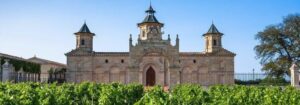
Cos d’Estournel expects excellent potential for 2025
Producers are measured but optimistic
Early commentary from leading Saint-Estèphe producers is measured but optimistic. At Château Cos d’Estournel, the technical team describes 2025 as a year of “precision viticulture,” with the heat and drought demanding careful canopy management and harvest timing. The resulting wines are reported to have deep color, ripe tannins, and notable concentration, reminiscent of 2022 but with greater freshness. Château Montrose echoes this sentiment, highlighting the dense, structured character of the wines and the exceptional health of the fruit, despite low yields.
And also
Château Calon Ségur and Château Lafon-Rochet both report good balance and aromatic purity, with small berries and moderate alcohol levels. At Château Phélan Ségur, the vintage is described as a “marathon,” requiring endurance and adaptability, but ultimately delivering wines with a classic Saint-Estèphe profile—structured, robust, and age-worthy. Across the appellation, producers emphasize the importance of gentle extraction to manage the thick skins and abundant tannins, aiming for balance and elegance rather than sheer power.
Pauillac-Weather Summary
Pauillac’s 2025 growing season mirrored that of Saint‑Estèphe, with a warm, dry winter followed by an early spring and rapid budburst. Flowering occurred around May 13–14, about a week earlier than average, and was both swift and uniform. Summer was exceptionally hot, with average maximum temperatures of 28.8°C in June and 27.5°C in July, and a peak of 39.8°C in August. Rainfall remained well below average, with only 32.5 mm in June, 28.8 mm in July, and 40.8 mm in August. The August heatwaves caused berry shrinkage and thick skins, concentrating sugars and phenolics but reducing yields.
Thanks to September rain
A major rain event in early September (up to 100 mm in some areas) provided relief and allowed for more gradual ripening of Cabernet Sauvignon. However, the timing and intensity of the rain posed challenges for some estates, with risks of berry splitting or dilution if harvest was delayed. Most top estates began picking Merlot in late August and Cabernet Sauvignon from mid‑September, completing harvest by the end of the month.
Isolated mildew outbreaks
Disease pressure was minimal, with almost no frost and only isolated mildew outbreaks. The combination of heat, drought, and timely rain produced small, concentrated berries with high color intensity and ripe tannins. Yields averaged around 30 hl/ha, but fruit quality was generally excellent.
Pauillac Producer Commentary
Château Grand‑Puy Lacoste describes 2025 as a classic Pauillac—structured and fresh, with moderate yields.
Château Lafite Rothschild sees outstanding potential, with deep color, layered aromatics, and moderate alcohol, calling it “fabulous stuff.”
Château Latour reports a classic, age‑worthy wine from small berries with thick skins and ripe tannins, the result of low yields.
Château Lynch‑Bages notes a robust, expressive wine with deep color, ripe fruit, structure, and balance.
Château Mouton Rothschild describes a powerful, balanced wine with dense structure and vibrant acidity, achieved through careful extraction.
Château Pichon Baron observes an excellent, precise, concentrated, fresh, and elegant wine, the product of “precision viticulture.”
Château Pichon Comtesse de Lalande heavy spring rains delayed flowering until the end of May and reduced potential berry numbers by 50%. Fruit set was completed by the end of the first week of June, and véraison began in early August. Merlot harvest started on 28 August, less than thirty days later, as drought and excessive heat accelerated ripening and pushed the vines to draw on deep water reserves in the rich, organic soils. The vintage demanded careful handling of the fruit, yet the balance revealed during vinification confirmed its promise for Pichon Comtesse. “As alcoholic fermentation progressed, a sense of natural equilibrium came into focus, requiring virtually no human intervention.” “The floral energy of the Cabernet Franc, with its distinctive rose and iris notes, was the final piece in the puzzle, completing Comtesse’s signature style.”Château Pontet‑Canet reports a promising wine from biodynamically grown, healthy fruit, showing aromatic purity and moderate alcohol.
Other shares
Château Lafite Rothschild’s technical team describes the 2025 vintage as having outstanding potential, with deep color, layered aromatics, and moderate alcohol levels (typically 12.5–13.5%). Early tastings reveal wines with excellent mid-palate, perfect acidity, and a remarkably long aftertaste, suggesting a vintage of both power and finesse. Château Mouton Rothschild and Château Latour report similar findings, emphasizing the dense structure, ripe tannins, and vibrant acidity of their wines, with careful extraction required to avoid over-extraction from the thick skins. Château Pichon Baron and Château Pontet-Canet both highlight the importance of precision viticulture in 2025, with canopy management and harvest timing critical to achieving balance. The resulting wines are described as concentrated, fresh, and elegant, with moderate alcohol and excellent aging potential. Across Pauillac, producers are optimistic about the vintage’s quality, though they note that yields are significantly below average due to the small berry size and drought stress.
Saint‑Julien-Weather Summary
Saint‑Julien benefited from its proximity to the Gironde estuary, which helped moderate the extreme heat of the 2025 summer. Spring was early and dry, with rapid budburst and uniform flowering in mid‑May. Summer temperatures were high, with July and August showing average highs of 27–29°C and peaks above 35°C. Rainfall was limited—particularly in June and July—leading to drought stress on gravel soils but contributing to excellent concentration in the fruit.
Wondeful cool Atlantic breeeze
The cool Atlantic breezes characteristic of Saint‑Julien helped preserve acidity and freshness. A timely rain event in late August and early September provided relief for the vines and allowed for a more measured harvest. Most estates began picking Merlot in late August and Cabernet Sauvignon from mid‑September, with harvest completed by the end of the month. Disease pressure remained minimal, and the fruit was generally healthy and concentrated, with small berries and thick skins.
Saint-Julien Producer Commentary
Château Branaire‑Ducru reports an elegant, precise 2025 with healthy fruit, aromatic purity, and moderate alcohol.
Château Ducru‑Beaucaillou describes a powerful yet elegant wine, concentrated, fresh,and balanced, with moderate alcohol.
Château Gruaud‑Larose observes a robust, expressive wine with deep color, ripe fruit, and a well‑balanced structure.
Château Léoville Barton reports a classic, age‑worthy 2025, structured and fresh, with moderate yields.
Château Léoville‑Las Cases declares an excellent, structured wine with deep color, ripe tannins, vibrant acidity, and “Super Second” quality.
Château Léoville‑Poyferré notes an aromatic, promising wine from small, thick‑skinnedberries requiring careful extraction.
Note
Château Léoville‑Las Cases, the largest and perhaps the most prestigious estate in Saint‑Julien, reports an excellent, structured vintage with deep color, ripe tannins, and vibrant acidity, suggesting long aging potential. Château Ducru‑Beaucaillou and Château Léoville‑Poyferré echo this view, highlighting the powerful yet elegant character of their wines, with concentration and freshness supported by moderate alcohol levels.
Château Léoville Barton and Château Gruaud‑Larose both describe classic, age‑worthy wines with structured tannins and fresh acidity. Across the appellation, producers emphasize the importance of gentle extraction to manage thick skins and abundant tannins, aiming for balance and elegance rather than sheer power. The outlook for Saint‑Julien is very positive, with several producers drawing comparisons to the great vintages of 2010 and 2022.
Margaux-Weather Summary
Margaux’s 2025 growing season was marked by early phenological milestones and intense summer heat. Budburst occurred around March 27, flowering in mid‑May, and véraison began around July 19. Summer temperatures were high, with June and July averaging 28–29°C and August peaking above 35°C. Rainfall was scarce—especially in June and July—leading to drought stress on the gravelly soils typical of the appellation. However, the cool Atlantic breezes and the diversity of Margaux’s soil types helped preserve acidity and freshness.
A more gradual ripening of Cabernet Sauvignon
A significant rain event in late August and early September provided relief and allowed for more gradual ripening of Cabernet Sauvignon. Most estates began picking white varieties around August 18–19, Merlot in late August, and Cabernet Sauvignon from mid‑September, with harvest completed by early October. Disease pressure was minimal, and the fruit was generally healthy and concentrated, with small berries and thick skins.
Margaux Producer Commentary
Château Brane‑Cantenac reports a moderately sized harvest producing a classic, age‑worthy wine, structured and fresh.
Château du Tertre harvested healthy grapes yielding precise, aromatic fruit with moderate alcohol.
Château Giscours produced ripe, robust wines with intensely deep color, strong structure, and expressive balance.
Château Margaux reports an outstanding harvest, producing wines of deep color, aromatic purity, and exceptional balance—un Grand Millésime.
Château Palmer produced a moderately sized harvest of powerful yet elegant fruit, yielding concentrated wines with fresh, balanced profiles.
Château Rauzan‑Ségla describes small, thick‑skinned berries requiring careful extraction, resulting in aromatic and very promising wine.
The teams explain :
Château Margaux’s technical team describes 2025 as outstanding and balanced, with deep color, aromatic purity, and moderate alcohol levels. The estate credits its ongoing research and innovation—including early mildew detection and trials with new fermentation vessels—for helping manage the challenges of the vintage. Château Palmer and Château Rauzan‑Ségla both report powerful yet elegant wines, with concentration and freshness supported by moderate yields. Château Brane‑Cantenac and Château Giscours highlight the classic, age‑worthy character of their wines, marked by structured tannins and fresh acidity.
Importance of precision viticulture
Across Margaux, producers emphasize the importance of precision viticulture and gentle extraction to achieve balance and elegance. The overall outlook is highly positive, with many drawing comparisons to the great vintages of 2015 and 2022.
Pessac‑Léognan and Graves-Weather Summary
Pessac‑Léognan and Graves experienced a mild, dry winter followed by an early, rapid budburst in spring. Flowering was swift and uniform in mid‑May, and summer brought intense heat, with June and July averaging 28–29°C and August peaking above 35°C. Rainfall was scarce—particularly in June and July—leading to drought stress on the gravelly soils typical of the region. However, slightly cooler temperatures compared to the northern Médoc, combined with the diversity of soil types, helped preserve acidity and freshness in the grapes.
White varieties
White varieties (Sauvignon Blanc and Sémillon) were harvested early, between August 12 and 21, producing aromatic wines with crisp acidity thanks to cool nighttime temperatures.
Red varieties
Red varieties were picked from late August (Merlot) through mid‑September (Cabernet Sauvignon), with harvest largely completed by the end of September. Disease pressure remained minimal, and the fruit was generally healthy and concentrated, with small berries and thick skins. Yields were low—particularly for white varieties—with some producers reporting up to 50% lower juice yields than usual.
Pessac-Léognan and Graves Producer Commentary
Château Carbonnieux produced healthy fruit with aromatic purity and the potential for moderate alcohol; the wine is elegant and precise. Château Haut‑Brion declared 2025 a “great” vintage, with aromatic purity, moderate alcohol, intense color, and outstanding balance. Château La Mission Haut‑Brion produced only a moderate volume of wine, describing it as powerful and concentrated yet fresh, balanced, and elegant. Château Pape Clément reported moderate yields but exceptional quality, producing a classic, age‑worthy wine that is structured and fresh. Château Smith Haut Lafitte noted small, concentrated berries with thick skins requiring careful extraction; the wine is intense, aromatic, and promising. Domaine de Chevalier produced ripe fruit yielding a wine with deep color, robust and expressive fruit, and a well‑balanced structure.
Château Haut‑Brion and Château La Mission Haut‑Brion both report outstanding, balanced wines in 2025, with deep color, aromatic purity, and moderate alcohol levels. Early harvesting of white varieties helped preserve freshness and aromatic intensity, while the red wines are described as concentrated, structured, and age‑worthy. Château Smith Haut Lafitte and Château Pape Clément highlight the importance of precision viticulture and gentle extraction to manage thick skins and abundant tannins. Domaine de Chevalier and Château Carbonnieux report robust, expressive wines with healthy fruit and balanced structures.
Across Pessac‑Léognan and Graves
Producers are optimistic about the vintage’s quality—particularly for dry whites, which show ripe, aromatic, and fresh profiles despite the heat of early August.
Sauternes and Barsac-Weather Summary
The 2025 vintage in Sauternes and Barsac was marked by uncertainty and variability, particularly regarding the development of botrytis cinerea (noble rot), essential for producing classic sweet wines. The region experienced a mild, dry winter and an early, rapid budburst in spring. Summer was exceptionally hot and dry, with August temperatures exceeding 35°C and rainfall well below average.
A lack of late‑summer humidity and morning mists
The lack of late‑summer humidity and morning mists—critical for botrytis development—posed significant challenges. Harvest began in late September, with some estates able to pick botrytized grapes thanks to localized mists near the Ciron river. Overall botrytis incidence was limited, and yields were significantly reduced. Estates closest to the Ciron, such as Château d ’Yquem and Château Climens, fared better, producing concentrated but small crops. The wines are likely to be rich but may lack the opulent unctuousness of vintages like 2017 or 2020; however, their freshness and precision may appeal strongly to collectors.
Sauternes and Barsac Producer Commentary
Château Climens grew healthy, biodynamic fruit with moderate botrytis, producing an elegant, precise wine.
Château Coutet reported limited yields but wines with bright acidity and freshness, making 2025 a promising vintage.
Château de Fargues harvested robust, ripe fruit, producing wines with deep color and well‑balanced structure.
Château Doisy‑Daëne produced grapes high in sugar but with limited botrytis; the resulting wine is focused and excellent.
Château d’Yquem harvested deeply concentrated fruit with moderate botrytis; the 2025 vintage will be outstanding, though produced in severely limited quantities.
Château Guiraud hand‑picked moderate yields, producing a fresh, expressive, and balanced wine.
Château Lafaurie‑Peyraguey grew healthy fruit with moderate alcohol potential; the wine is aromatic, pure, and exceptionally well‑balanced.
Château Rieussec produced a moderate quantity of a classic, age‑worthy wine that is vivid,fresh, and structured.
Château Suduiraut enjoyed a very good harvest with moderate botrytis, producing an aromatic, fresh wine with well‑concentrated fruit.
Châteaux said
Château d’Yquem, the region’s flagship estate, reports an outstanding but limited vintage in 2025, with high concentration and moderate botrytis development. The technical team notes that the lack of late‑summer humidity restricted noble rot, but meticulous selection and multiple passes through the vineyard allowed for a rich, balanced wine. Château Doisy‑Daëne and Château Coutet report excellent, focused wines with high sugar levels and limited botrytis, resulting in concentrated, fresh profiles. Château Suduiraut and Château de Fargues highlight the aromatic intensity and balance of their wines, while Château Climens—farmed biodynamically—reports healthy fruit and moderate botrytis.
A careful berries selection
Across Sauternes and Barsac, producers emphasize the importance of precision harvesting and careful selection to achieve balance and concentration in a challenging year. The overall outlook is cautiously optimistic: the best wines are likely to be fresh, precise, and age‑worthy, though produced in very limited quantities.
Saint-Émilion-Weather Summary
Saint‑Émilion’s 2025 growing season was marked by early phenological milestones and notable resilience to heat. Budburst occurred around March 27, followed by uniform flowering in mid‑May and véraison beginning around July 19. The region’s clay and limestone soils provided natural resistance to the intense summer heat, helping vines retain freshness and avoid excessive stress.
High summer temperatures
Summer temperatures were high, with July and August averaging 27–29°C and peaks above 35°C. Rainfall was limited—especially in June and July—but a timely rain event in late August and early September relieved vine stress and allowed for more gradual ripening of Merlot and Cabernet Franc.
Early harvests
Harvest began earlier than ever at some estates: Château Troplong Mondot started on August 28, and Château Cheval Blanc began picking Merlot in late August. Cabernet Franc followed in early September, with most estates finishing by mid‑September. Disease pressure was minimal, and the fruit was healthy and concentrated, with small berries and thick skins. Yields were low, averaging around 30 hl/ha, but fruit quality was exceptional, showing deep color, supple tannins, and ripe Merlot fruit balanced by the minerality preserved during cool nights.
Saint-Émilion Producer Commentary
Château Angélus produced a moderate crop in 2025. The wine is classic, age‑worthy, fresh, and firmly structured.
Château Ausone reported moderate yields but exceptional quality, with freshness, power, concentration, and fine balance.
Château Cheval Blanc declares 2025 an outstanding harvest, producing fresh, aromatically complex wines with solid structure and fine balance.
Château Figeac harvested fully ripe fruit yielding deep color, expressive and robust body, and a well‑balanced structure.
Château Pavie reports a fine harvest of small, aromatic berries with thick skins requiring careful extraction; the vintage is very promising.
Château Troplong Mondot harvested early (August 28), producing wines with precise,crisp, fresh fruit and notable aromatic purity.
And more
Château Cheval Blanc’s technical team describes 2025 as outstanding and balanced, with freshness, structure, and aromatic complexity. The estate’s mosaic of gravel, clay, and sand soils allowed for optimal ripening and preserved acidity, resulting in wines of both power and finesse. Château Ausone and Château Pavie report powerful yet elegant wines, with concentration and freshness supported by moderate yields. Château Angélus and Château Figeac highlight the classic, age‑worthy character of their wines, marked by structured tannins and fresh acidity. Château Troplong Mondot, which began harvesting earlier than ever, emphasizes the importance of precision picking to capture crisp fruit and aromatic purity. Across Saint‑Émilion, producers are optimistic about the vintage’s quality, with many comparing 2025 to the great years of 2010 and 2022.
Pomerol-Weather Summary
Pomerol’s 2025 growing season was defined by early ripening and small berries, leading to a compressed Merlot harvest. Budburst occurred around March 27, flowering in mid‑May, and véraison by July 19. The region’s clay and limestone soils provided natural resilience to the intense summer heat, helping vines retain freshness and avoid excessive stress. Summer temperatures were high, with July and August averaging 27–29°C and peaks above 35°C. Rainfall was limited, but a timely rain event in late August and early September relieved vine stress and allowed for more gradual ripening of Merlot and Cabernet Franc.
Earlier than ever
Harvest began earlier than ever at some estates, with Château Lafleur starting on August 26. Cabernet Franc followed in early September, and most estates finished by mid‑September. Disease pressure was minimal, and the fruit was healthy and concentrated, with small berries and thick skins. Yields averaged around 30 hl/ha, but fruit quality was exceptional, showing deep color, supple tannins, and ripe Merlot fruit balanced by minerality from cool nights.
Pomerol Producer Commentary
Château La Conseillante describes 2025 as a classic vintage with moderate yields, producing fresh, structured, age‑worthy wines. Château Lafleur reports an extraordinary and innovative harvest, noting that the estate is now producing Vin de France; early assessments are exceptional. Château Le Pin harvested moderate yields, producing fresh, elegant wines that are powerful, concentrated, and well‑balanced. Château L’Évangile reports healthy fruit with moderate potential alcohol; the wine is elegant, precise, and aromatically pure. Château Pétrus harvested limited yields of outstanding quality, with moderate alcohol, deep color, concentrated flavors, and ripe tannins. Château Trotanoy reports a wine of deep color, robust ripe fruit, expressive character, and balanced structure.
Headlines
Château Lafleur made headlines in 2025 by announcing its withdrawal from the Pomerol and Bordeaux appellation systems, citing the need for greater flexibility in the face of climate change. The estate describes the 2025 vintage as extraordinary, with early tastings showing exceptional concentration, freshness, and balance. Château Pétrus and Château Le Pin both report outstanding, concentrated wines with deep color, ripe tannins, and moderate alcohol.
Château La Conseillante highlights the aromatic intensity and balance of their wines, while Château Trotanoy and Château L’Évangile report robust, expressive wines with healthy fruit and balanced structure. Across Pomerol, producers are optimistic about the vintage’s quality, with many comparing 2025 to the great years of 2010 and 2022.
Fronsac and Canon-Fronsac-Weather Summary
Fronsac and Canon‑Fronsac experienced a classic 2025 pattern: a mild, dry winter; early, rapid budburst; and a hot, dry spring that set the stage for uniform and early flowering. Summer temperatures were high, with July and August averaging around 27°C and peaks above 35°C.
Soils good for resilience
Rainfall was limited—particularly in June and July—but the clay and limestone soils characteristic of the region provided natural resilience to drought, helping vines retain freshness and avoid excessive stress. A timely rain event in late August and early September relieved vine stress and allowed for more gradual ripening of Merlot and Cabernet Franc.
Average yield is 30hl/ha
Harvest began in late August for Merlot and continued into mid‑September for Cabernet Franc, with yields averaging around 30 hl/ha. Disease pressure was minimal, and the fruit was healthy and concentrated, with small berries and thick skins. The wines are expected to be deeply colored, aromatic, and well‑balanced, with supple tannins and ripe fruit.
Fronsac and Canon-Fronsac Commentary
Château Dalem reports a promising harvest, producing wines with intense color, firm structure, ripe tannins, and fine balance.
Château de La Dauphine enjoyed an excellent harvest of biodynamic, healthy fruit, showing moderate alcohol potential and notable aromatic purity.
Château Fontenil produced a healthy crop with strong aromatic purity and moderate alcohol potential; the wine is precise, with an elegant palate.
Château La Vieille Cure harvested a moderate crop, producing a fresh wine that is robust, concentrated, and expressive.
Château Moulin Haut‑Laroque reports moderate yields of classic, age‑worthy fruit, resulting in a wine that is fresh and structured.
In detail
Château de La Dauphine, a leading biodynamic estate in Fronsac, reports an excellent and balanced 2025, with healthy fruit, aromatic purity, and moderate alcohol levels. The estate credits its organic and biodynamic practices with helping to manage the challenges of the vintage. Château Dalem and Château La Vieille Cure both describe promising, structured wines with deep color, ripe tannins, and balanced profiles. Château Moulin Haut‑Laroque and Château Fontenil highlight the classic, age‑worthy character of their wines, marked by structured tannins and fresh acidity. Across Fronsac and Canon‑Fronsac, producers are optimistic about the vintage’s quality, with many drawing comparisons to the great years of 2010 and 2022.